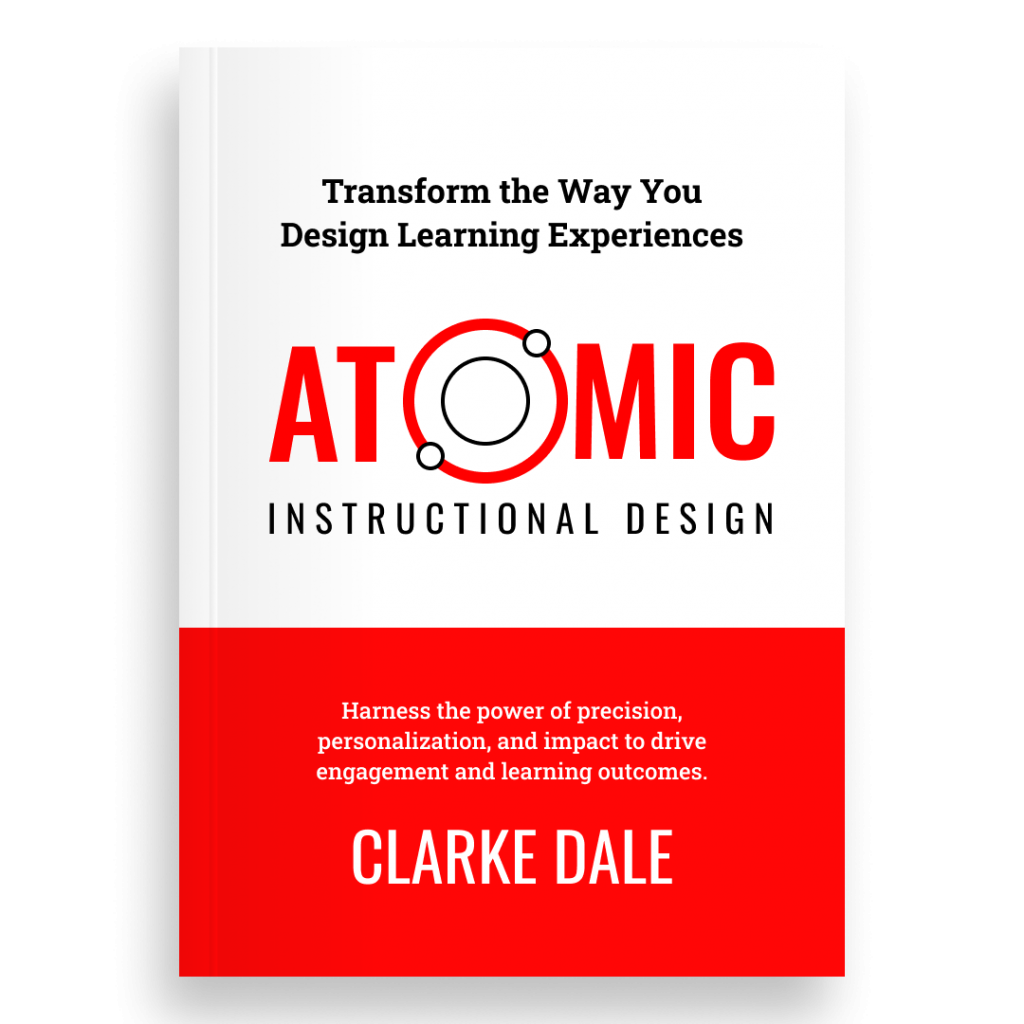


ATOMIC

INSTRUCTIONAL DESIGN

Atomic Instructional Design is not just a guide; it’s an invitation to reconsider the way we approach instructional design. It prompts us to understand that designing powerful learning experiences can be as intricate, dynamic, and adaptable as an atom, responding adeptly to the evolving needs of learners.

Join this journey with Atomic Instructional Design. Let’s re-imagine instructional design together.

BUY THE BOOK

ATOMIC

INSIGHTS

What Awaits You in the Atomic Universe of Instructional Design

Uncover the Building Blocks of Instructional Design

Deepen your understanding of the essential elements that make up effective learning experiences, as the book unveils a unique, atom-based analogy for instructional design.
Transform Complexity into Clarity

Navigate the intricacies of instructional design with newfound ease and clarity, as this book simplifies complex processes and concepts, making them more accessible and manageable.

Optimize Learning Experiences

Discover innovative strategies to optimize your learning modules, by understanding the interplay between learning objectives, content, assessments, practice activities, and training requirements.

Elevate Your Instructional Design Skillset

Through real-world examples and practical applications, the book offers you an opportunity to hone your skills, bringing you a fresh perspective and powerful tools to become a more effective instructional designer.

Downlodable Guides

Atomic Instructional Design Template

A guide that provides a structure for creating an atomic instructional design, with space for you to fill in your own learning objectives, content, assessments, and practice activities. 

Bloom's Taxonomy Mapper

A concise, visually appealing guide to Bloom’s Taxonomy, showing the levels of cognitive complexity and suggesting verbs to use for objectives at each level.

Guide to Building Learning Molecules and Organisms

A step-by-step guide to building more complex learning experiences by combining instructional design atoms into molecules and organisms.

Practice Activity Idea List

A list of various practice activities suitable for different content areas and learning objectives, categorized by Bloom’s taxonomy level.

FAQs

This book is the culmination of years spent in the trenches of instructional design, grappling with the intricate, multifaceted process of crafting comprehensive training programs. Over time, the analogy of Atomic Instructional Design emerged as a tool that significantly clarified the intricate interplay among various instructional elements. It became a compass, guiding the creation of dynamic and effective learning experiences. The goal of writing this book is to share this powerful analogy, hoping it may serve as a transformative tool for other educators, instructional designers, and anyone involved in the learning process—just as it has been for me.

The Atomic Instructional Design Model is a novel approach to instructional design that breaks down the components of learning experiences into their simplest units, much like atoms in science. This model helps instructional designers more effectively construct meaningful and efficient learning experiences.

While this book is primarily written for instructional designers and educators, anyone interested in the creation of effective learning experiences can benefit. This includes students studying education, curriculum developers, eLearning professionals, and even corporate trainers.

The Atomic Instructional Design Model is unique in its simplicity and approachability. By drawing an analogy with atoms, it helps users visualize and understand the components of instructional design and how they work together to form cohesive learning experiences.

Very! The Atomic Instructional Design Model provides actionable guidance that readers can directly apply to their instructional design work. The book also offers downloadable resources such as templates and guides to help readers apply the concepts.

Bloom’s Taxonomy plays a critical role in the Atomic Instructional Design Model. In the model, the levels of Bloom’s Taxonomy are represented by the energy levels of electrons. This illustrates the complexity of learning objectives, and provides a guide for aligning content, practice activities, and assessments with these objectives.

About The Author

Clarke Dale

Bringing together 15 years of experience in the design, development, and direction of diverse learning solutions, innovative application design and development, as well as multi-modal blended training programs, the author has established himself as a seasoned leader in the field. His unique expertise in steering cross-functional teams to deliver exceptional award-winning products and services shines through his work, consistently exceeding customer expectations and catalyzing business growth.